A deep-dive archive exploring what makes fictional worlds feel alive.
-
Disney Has Spent Years Apologizing for a Magic System Built on Sociopathy. Worldbuilding Lessons from Peter Pan
Unlock the unsettling secrets of Neverland and the intrinsic magic in Peter Pan. Explore how Disney sanitized this J.M. Barrie’s sociopathic magic and why the original story remains one of the most uncomfortable children’s tales in literary history.
-
Your House Has Opinions Now and It Remembers Everything You Said While It Couldn’t Talk Back
Most fantasy fans view talking swords and enchanted teapots as mere tools, but sentient objects actually serve as a brutal honesty test for your worldbuilding. Explore how your favorite stories handle the terrifying reality of furniture that thinks, feels, and remembers everything you did while it couldn’t talk back.
-
Your Boss Was a Dick and Now You’re Rubbish. Worldbuilding Lessons from Beauty and the Beast
Discover why the famous curse was actually a performance review. The sentient objects in Beauty and the Beast represent the darkest parts of workplace burnout, and their return to humanity might be the most tragic ending of all.
-
When Your Sword Turns into an Elephant and Thunderstorms Get Hangry. Worldbuilding Lessons from One Piece
Explore the fascinating world of sentient objects in One Piece, from swords that eat Devil Fruits to ships with souls. Discover how Eiichiro Oda uses weaponized zoology and the Klabautermann to create a living, breathing world that turns tools into loyal companion and terrifying enemies.
-
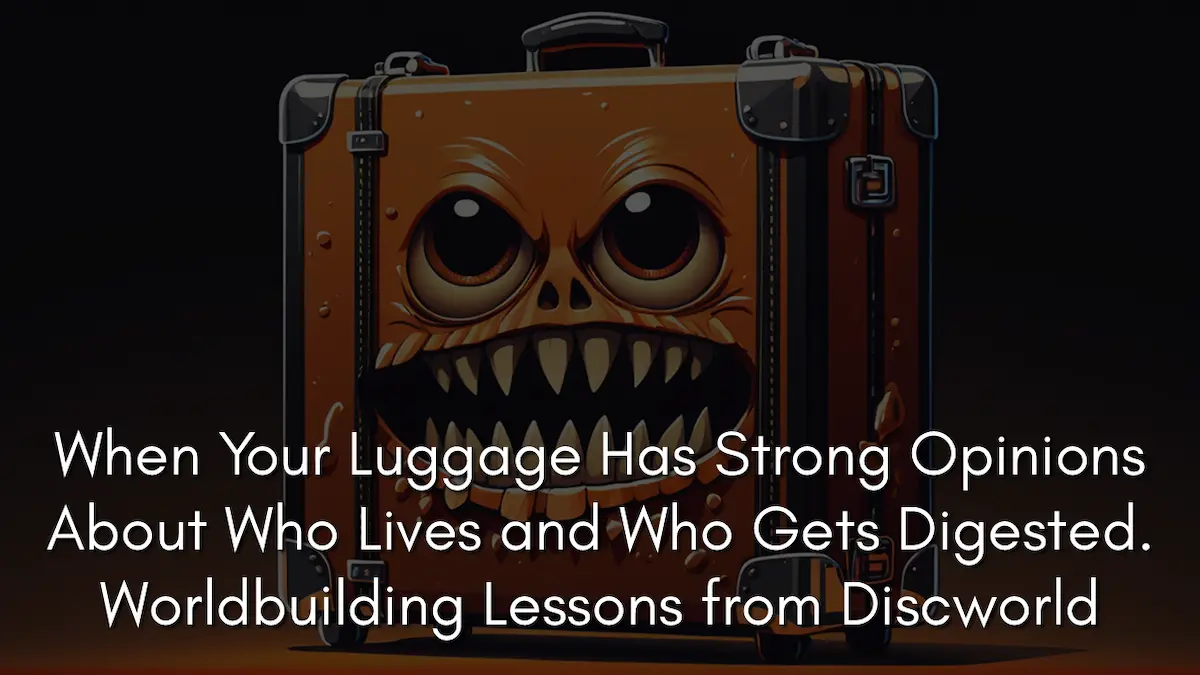
When Your Luggage Has Strong Opinions About Who Lives and Who Gets Digested. Worldbuilding Lessons from Discworld
From homicidal luggage to clay workers filing for overtime, the existence of sentient objects in Discworld proves that consciousness is a hilarious side effect of magic. Discover how Sir Terry Pratchett used thinking furniture and ambitious hats to deconstruct labor laws, loyalty, and the very nature of the soul in this essential guide to the…